Appendix V: St. Thomas Distinctives
Appendix V: St. Thomas Distinctives
“Let us, therefore, forsake the vanity of the crowd and their false teachings, and turn back to the Word delivered to us from the beginning.” - Polycarp of Smyrna (A.D. 69–155)
“Built on the foundation of the apostles and prophets, Christ Jesus himself being the cornerstone.” - Ephesians 2:20
THERE ARE SEVERAL distinctive’s that give the St. Thomas Church its own ethos amongst even some historic Church models. We hold to all major elements of historic Christianity yet there are several practices that would give this movement a unique sense of mission. The breadth of practices allowed within the Church can vary but should never go against core apostolic beliefs. The difference is apostolic traditions never can be changed, but ecclesiastical traditions can for the sake of mission and culture.
Here are the following distinctive’s that make St. Thomas Church unique amongst especially modern expressions of the Church:
Facing the Altar
Since the 1950s in many historic Churches there was a choice of slowly putting the altar (communion table) to face the people. Before that, chiefly in Church history the altar was exclusively put against an east-facing wall (known as Ad orientem) so the Presbyter (priest) would pray towards the east. “Now, in your gatherings, in the holy Church, convene yourselves modestly in places of the brethren, as you will, in a manner pleasing and ordered with care. Let the place of the priests be separated in a part of the house that faces east.”688 Clement of Alexandria (A.D. 200) said: “Prayers are made looking towards the sunrise in the east.” St. Basil the Great says: “We pray standing, [The earliest posture of prayer was standing, with the hands extended and raised towards heaven, and with the face turned to the East.]”
In many modern Churches there are worship bands facing the people, no crosses in the front and the only focal point is a pulpit. Having a visible cross and altar area with Holy Gospels will encourage more reverence and the reason why we are meeting, to worship God.
We seek to restore this practice of an east-facing altar, believing it will cater to more reverence, more of a worshipful experience of presider, and people facing towards the slain Lamb of God. We do not disdain or look down on having the altar face the people; this is just a more ancient way, since the beginning and we desire to cater to more deep worship of the Triune God.
Head Coverings For Sisters
The practice of head covering is an Apostolic old practice in the Church. In the St. Thomas movement we seek to encourage sisters to wear a covering over their head while praying in the Church gathering. The covering is not required at any other times. This is a graceful rule, as it is not imposed, but recommended. It is not an “ism” or fixation, but we do believe it will add to more of a reverential and godly experience in the presence of the Lord. This practice will be more caught than taught. Early saints spoke of this practice as acknowledging the presence of the holy angels when we worship the Holy Trinity.
From the Holy Scriptures we read:
“Now I commend you for remembering me in everything and for maintaining the traditions, just as I passed them on to you.”
“If a woman does not cover her head, she should have her hair cut off. And if it is shameful for a woman to have her hair cut or shaved off, she should cover her head.”
“For this reason a woman ought to have a sign of authority on her head, because of the angels.”
Around the year 200, at Carthage, North Africa, Tertullian wrote: “For to this very day the Corinthians veil their virgins. What the Apostles taught, the disciples of the Apostles confirmed.” St. Clement in A.D. 190 echoes the apostolic normal of this practice: “For this is the wish of the Word, since it is becoming for her to pray veiled.” It was without doubt that sisters in the early Church veiled themselves. This practice was historically done consistently all the way to the Protestant reformation and beyond.
In Churches in India, Middle Eastern, Oriental countries today outside of Western influence wearing Head Coverings is normative in worship settings particularly.
House Churches
“In early Christianity, there were no church buildings. Eucharist was celebrated by the Church assembled together in private homes.” We understand that many Churches start in a home but then steadily progress towards renting a facility to grow into a full functioning parish. Our heart is with that process but we also want to give room to another ecclesiastical model where the Church can begin in the home and stay in the home. A permanent (or portable) altar can be set up in a spare room and sanctified. Multiple house churches can start in a city or town area, and a Presbyter (priest, deacon, etc) can visit each one on a rotation. This will be done for the sake of mission. The earliest forms of the Apostolic Church started in homes with permanent altars and even permanent baptismal fonts! We believe this practice will cater to greater disciple-making and growth of the Church. St. Thomas Church seeks to be a mixture of house Church parishes as well as larger building parishes. We are open to both modes and sense a great synergy between both. Also, it should be noted that we will place a much heavier emphasis on lay leader training (including diaconate) as house churches would demand this of necessity.
The Role of Women In Gatherings
There has been a tremendous pressure and movement towards allowing for and implementing women into all areas and offices of the Church. This unbiblical precedent has led to even women Bishops in many mainline denominations. In many of these same churches homosexuality and all types of perversion have also come in under the same guise. St. Thomas Church follows the Apostolic teachings and example of Jesus allowing only for men in leadership as Presbyter (priest, deacon) and Bishop. The Scriptures teach the opposite for women they are never to be ordained and to be in submission in gatherings: “The women should keep silent in the Churches. For they are not permitted to speak, but should be in submission.” Modern day theologians try and worm their way around several passages of similar clarity in the New Testament.
Our clear position is that Jesus elevated women with dignity and respect. Women in the Church gatherings are to remain silent. If asked by the Presbyter to conduct a Scripture reading she should do it with reverence and wearing a Scriptural head covering (another distinctive). Sisters have a great responsibility in their families and also training and being examples to younger sisters in the faith. Also in Church history when served in deacon type functions, missionary work, serving widows and the poor.
“Woman taught the man once, and made him guilty of disobedience, and wrought our ruin.” Any sister who in humility submits to the order of Church and marriage as God prescribes it in the New Testament will have the blessing and peace of God on her life. In an age of rampant feminism, sisters who submit to God’s order have His blessing as Scripture says: “The unfading beauty of a gentle and quiet spirit, which is precious in God’s sight.”
Ancient and Modern Worship
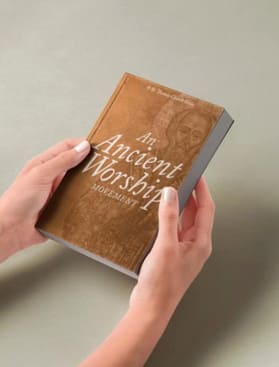
St. Thomas Church in each location will have a mixture of contemporary worship and hymns with Church liturgy. We seek to be a blend of both (Ancient and Modern) to allow for some newer godly expressions of worship in newer Spirit-filled worship.
We seek to be a Biblical, uncompromising movement in the midst of the modern day, being relevant and missional. Having modern worship songs with older liturgies gives a sense of Ancient worship that is applicable for the modern day.
As seeking to be an expression of the Apostolic Church we are not innovators but accepting some new cultural ecclesiastical traditions. These new traditions will help in the spreading of the mission and Church of Christ. For example, in our liturgy book modern renditions will be used where applicable which will give prayers in modern language with ancient beliefs.
Multiplying Churches
The Ancient Church was a fast-growing Spirit-filled movement. A Church historian scholar suggested that “by the year A.D. 350 there could have been as many as 15.8 million Christians within the Roman Empire.” What a staggering number considering the Roman Empire population could have been roughly 65 million people at that time. We have heard a lot in Church circles about multiplying disciples, which is important and Biblical. But the idea of multiplying Churches is still is foreign for many. This must be put as a priority immediately in the minds of all believers in St. Thomas Churches. We do not exist for ourselves but to reach all of humanity with the Good News of Jesus Christ.
There are over two billion people in the world that still have never heard the Name of Jesus once! We are to share this “glad tidings of great joy” with all mankind. Whether it is a house Church that multiplies into several or a building parish Church that becomes an Antioch Mission sending center, in all things the great commission of Jesus Christ is our priority. All disciples make disciples. The clergy are there to encourage this ultimate work.
Visiting A St. Thomas Meeting
If you are a Christian looking for a Church to fellowship in or a person simply seeking God, here is what you can expect when visiting a St. Thomas Church meeting. The venue itself could be different, meaning it could be a rented space of any type, a Church building, or a meeting in the home, but your experience should still be the same by and large. Here are some things you will expect to see:
Acknowledging God’s Presence
One of the first things you will notice when visiting a St. Thomas Church is a sign hung in the vestibule of the church (entry way). On this sign you will read a statement asking you to pause, quiet yourself, and acknowledge that you are entering a holy space. In a home meeting removing shoes is normal as etiquette for visitors to do, but this also can be a sacramental step of saying you are entering God’s presence just as Moses removed his sandals before the burning bush.
Upon entering a gathering, before entering the sanctuary (set apart space), you can pause acknowledging God’s presence and even do a slight bow towards the cross and altar. “I will enter Your house, At Your holy temple I will bow in reverence for You.” This small gesture of bowing to acknowledge God was an Old Testament practice and was carried over into the New Testament Early Church.
Silence Before God
In many modern Churches there is loud music playing, count down clocks, people greeting you when you walk in, etc (This fellowship can all be done after the service). But in St. Thomas Churches, we ask that you come in and sit in silence without talking to others, preparing your heart to worship God.
When you come into the sanctuary whether it be a home, rental, or church building the seating will be arranged to face towards an altar. Don’t worry. You will not be interrogated. This is a safe place to explore, observe, and experience God. Silence is an important step in allowing God to work in our lives “Be silent in the LORD’s presence and wait patiently for Him.”
The Focal Point A Cross
Christianity is all about Jesus Christ. Even the way the Church meets garners your mind and heart towards the focus of the Son of God. All seating will face towards an eastward facing (where possible) altar area where you will see a table against a wall with a chalice (communion cup) covered with linen, the Holy Gospels book, and the Holy Scriptures on a book stand.
Above the altar table you will see a cross centered on the wall (or table cross). This cross reminds us we have come to worship the Triune God, namely to glorify Jesus Christ for His death, burial, and resurrection.
You will also notice that the Presbyter (priest, deacon, etc.) faces towards the altar during much of the service. He is here to worship God just like everyone else. We all face towards God, including worship leaders. Too many churches make the service like a show you come to watch instead of a worship experience you partake in meaningfully.
Liturgical Worship
The service will start and end with participatory liturgy that is read by the Presbyter and people. If you are a visitor, you are welcome to read along and share in the meeting. Though there is a time for a sermon in the service, most of the time is shared in congregational worship, responsive reading by the congregation and Scripture readings.
The key to the meeting is worship. We have come to worship the living God, not to only hear a sermon about Him. All aspects of the meeting speak to us to fix our gaze heavenward to the unseen realm to worship the Triune God. You will have a liturgy book (or pamphlet) on your seat or it can be obtained as you walk into the sanctuary. The words in the liturgy are ancient, certain phrases and prayers are virtually as old as the two thousand year-old Church itself. There is time given for worship songs that are old and contemporary. It is as we say these prayers in unison that we begin to renew our minds and grow closer to Christ.
Holy Communion
The worship experience climaxes in the celebration of the Holy Communion (Eucharist). This sacramental act is reserved only for those who are water baptized Christians who confess and believe in Christ.
If you have been water baptized in the Holy Trinity you are welcome to partake in Communion. If you have not been you are still welcome to go forward when others are receiving and, crossing your arms together, you can go to the Presbyter (priest, deacon, etc) and he will say a prayer of blessing over you. You will notice people receiving the elements (wine and bread) reverentially with kneeling at the front or bowing This is to reverence the sacredness of Jesus command: “‘This is My Body which is for you. Do this in remembrance of Me.’ In the same way also he took the cup, after supper, saying, ‘This cup is the new covenant in My Blood. Do this, as often as you drink it, in remembrance of Me.’”
The most intimate form of worship we can do is to remember the Lord through the Holy Eucharist. “Those who eat of me will hunger for more, and those who drink of me will thirst for more.” Heaven touches earth, time opens up for us to experience the worship of the Lamb.
Wisdom says to us: “Come, eat of My Bread and drink of the Wine I have mixed. Leave your simple ways, and live, and walk in the way of insight.”
Will you come today and worship Him?