Appendix VI: Starting A Mission
Appendix VI: Starting A Mission
“Indeed, a house is a little church.” - St. John Chrysostom
“God’s plans for you are better than any plans you have for yourself. So don’t be afraid of God’s will, even if it’s different from yours.” - Greg Laurie
VIRTUALLY ANYONE CAN be used by God to start mission work in an area. A mission work is a gathering of two or more people who have the desire to see a Church established in the area. Most mission works begin in a home setting which is the most practical, accessible space. During the first three hundred years of Church history, the primary meeting place was also the home. This “little Church” model is something that is valid not only during times of persecution or pressure but also during times of peace.
STEP 1 - Setting Up an Altar Area
Here are some practical steps you can take to prepare an altar area in your home for a St. Thomas Church meeting:
- As per the St Thomas Distinctives, you want to find a space in your home that has an available east-ward facing wall (if possible). This practice was adopted by the Jewish people before who faced towards the Temple in Jerusalem. Additionally, Christian believers practice was towards the East where Jesus ascended to heaven on the Mount of Olives. Later in history Churches were even built in a cross shape with the pulpit on the east end. The sun rises in the east, and believers were supposed to look to the east for Christ’s return.
Practically speaking, it is ideal if there is room for a small table to be placed against this eastward-facing wall. This will become the altar area. Some homes will need to move furniture around for each meeting, while others can afford a room that is setup as a dedicated worship space. The latter is preferable. In many Christian homes, there can be a dedicated prayer space that is eastward facing with a Cross or Holy Scriptures setup. Such sacred spaces speak to our devotion for the Lord to unbelievers and visitors and also sanctifies our homes.
- The Holy Table or Altar should be a reasonably sized table with room to stand in-front of it and ultimately be used for Holy Communion. It can be a temporary plastic table that folds and can be put away or a more permanent wooden table.
It is important to be reverential about furniture that is used for these sacred actions, so if the portable table or other table is dedicated to this purpose, it should not be used for any other secular purposes. On top of the table should be placed white linen cloth: “At the Communion time the Holy Table shall have upon it a fair white linen cloth.”
If the Altar table is portable when putting it away, please reverently fold the linen cloth and any other items on top of it, and carefully store them where they will not be misused for other purposes.
The focal point of our gathering is Jesus Christ and this is symbolized by the wooden cross that is either hung on the wall above the altar or placed as an altar cross on the table. This cross should be reasonably large in size as it speaks of the reason for our Church gathering. It is recommended that the cross is a bare cross not a crucifix (Jesus hanging on the cross) as the bare cross speaks of the resurrection of the Lord. As we come on the Lord’s Day we are celebrating this resurrection.
On the Altar table the Holy Scriptures are displayed prominently on a book holder. The Gospel Book can be placed also on the altar and should only be used for the Altar Table and the “Gospel Reading” done in services.
Having space to put folding chairs in front of the Altar area is important. Set them in rows sequentially. We are not gathering towards ourselves but toward Jesus Christ so the chairs represent that reality. They are not set up in a circle facing each other rather everyone faces toward the Holy Cross.
A St. Thomas Church poster can be put on the wall that will let visitors acknowledge the sacred space and it should be treated as such. It is also a reminder for people to sacramentally prepare themselves to worship the Lord and assume a posture of desiring to meet with the Lord.
The following is found on the poster: As we come into the sanctuary to worship the Triune God, pause and still your heart. Before you enter pause in silence and still your heart before God, you can optionally make a bow gesture.
These sacramental actions testify that we are His and have come to acknowledge God’s very presence. “I will enter Your house, At Your holy temple I will bow in reverence for You.” (Psalm 5:7) “Be silent in the LORD’s presence and wait patiently for Him.” (Psalm 37:7)
We have come with thankful hearts to worship the Son of God and celebrate His resurrection. Praise be to God!
This laminated poster sheet and even appropriate wood crosses can be sent to you from St. Thomas Church.
An Ancient Pathway
This is a pathway to the ancient Church to be a part of something greater than yourselves. By taking practical steps to start a mission work in your area, you are allowing God to use you as an instrument to bring others in contact with this faith once delivered to the saints.
In starting a mission work you do not need to reinvent the wheel or figure out how to do this yourself, rather you can to adopt principles and traditions from the two thousand year-old historic Church. It is the Church built in God’s way that lasts and endures in this life and in the life to come. Live your life for what is eternal and what matters. Already you have learnt how to set up an altar area in your home which is an important step. Next, you will learn how to conduct a very basic service.
STEP 2 - A Basic Liturgical Service
It is recommended to start a simple service of liturgical prayer which can be done any day of the week. It is suggested you follow the hours of prayer as prescribed in the St. Thomas Church Liturgy, so either have a 9 am Morning Prayer service, a 12-noon Midday Prayer, or 3pm Afternoon Prayer service. That way you are praying alongside millions of other historic Church believers and others in St. Thomas gatherings.
Here are some practical steps to run this meeting:
In most cases it is best to have at least two people administering this meeting. One would be the celebrant (leader) and the other the respondent (lay people). In the context of the mission work, both are at first lay leaders, but one will take the role of “leader.” The leader will read the text that is not “bold” while the other layperson will read the bold text. If you are alone you simply read out all leader and respondent statements.
Before starting the Prayer time (hours of prayer), it is good to have a moment of silence, to pause and consider the Lord.
As an example, clergy (and lay leadership) when coming near the altar make a slight bow towards the cross with their head before they are seated.
It is good to read the prayers slowly and to remember that you are praying with many others in the Church and for the whole Church and the world. Most of the statements in the prayers are from Holy Scripture or an Ancient Prayer from an early Church father. Mystically, we can also consider that as we pray, we are entering into those prayers and worship before the very throne of God (Revelation 5, Isaiah 6) and into the timeless worship of the Ever Living One.
If you are reading out-loud the Scripture readings with the prayer time, have the Scripture(s) readings marked and ready ahead of time. In the rubrics (italic statements), the St. Thomas Church Liturgy shows which statement to say. As some statements and prayers should only be said by an ordained Presbyter (priest).
Starting to pray the hours of prayer a few times a week or even daily is a very important way to cater to the presence of God in your home, and a way to start to align yourself with the Historic Ancient Church. Having houses of prayer is Biblical and historical: “When he [Peter] realized this, he went to the house of Mary, the mother of John who is called Mark, where there were many people gathered in prayer.”
STEP 3 - Catechesis Process
In many cases, those who are using this book will be in areas where there is no Biblically faithful historic Church. Therefore, there is the need to start a mission work in your home or area.
Discipleship (Catechesis) is the Ancient Church process of training people (catechumen) who are seeking to be water baptized and become a part of the Church. This process is always done with the guidance of a local parish Presbyter (priest, deacon, etc) and the Bishop would be the one to water baptize and give confirmation to individuals by the laying on of hands. Each situation is different and St. Thomas Church is seeking to serve everyone in their own context.
Here are some definite steps you can take as individuals and small mission groups toward starting your discipleship process remotely or at the very least preparing for it:
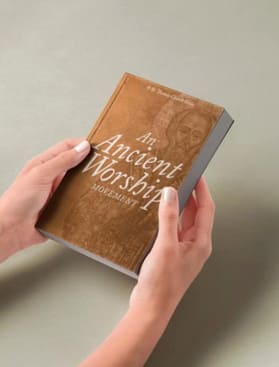
- Read the book, An Ancient Move of God, Book of Acts. It is an overview more of the Church you are being baptized into and gives you the basics of the Ancient faith.
It is best to read it with another person or in a group setting, discussing and searching some or all of the Scripture references.
We also encourage the group study of fill in the blank discipleship materials that can be provided for you by St. Thomas Church. You will need someone to guide you through these books and it is best done in a small group even in a live video meeting online.
Do not journey alone. Reach out to a leader at St. Thomas Church and also ask the Lord in prayer for at least one other person you can explore the Ancient Faith with. We are meant to live in community and live out our Christian walk in community. Jesus exemplified this in living with his twelve disciples for 3 years.
We will continue to supply new materials and resources for you to understand the Ancient Faith better and relay these materials to your Mission group. Reading this book and others in the St. Thomas Book Series will also help with your Christian discipleship.
As St. Thomas Church connects with individuals and groups, we will prayerfully serve and find ways to connect you practically with a Presbyter (priest, deacon) or bishop so that you can continue your journey toward the Ancient Church and be a part of establishing a testimony of the Church in your area.
Closing Prayer
We close this volume with a quote from an Ancient document called the Didache and a benediction from Holy Scripture.
May God preserve you from the coming time of testing and trial on earth. And grant you community in His Church.
“Then shall the creation of men come into the fire of trial, and many shall be made to stumble and shall perish; but they that endure in their faith shall be saved from under the curse itself. And then shall appear the signs of the truth; first, the sign of an outspreading in heaven; then the sign of the sound of the trumpet; and the third, the resurrection of the dead; yet not of all, but as it is said: The Lord shall come and all His saints with Him. Then shall the world see the Lord coming upon the clouds of heaven.”
The grace of the Lord Jesus be with God’s people. Amen.