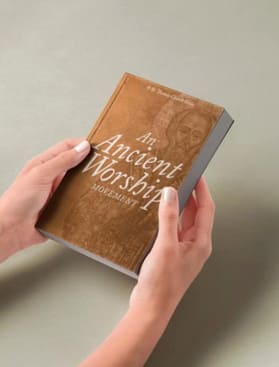
Chapter One: Early Church Testimony and Decline
Chapter One: Early Church Testimony and Decline
“In the darkest ages Christ has always had a Church; and if darker times shall come, He will have His Church still.’” - Charles Spurgeon
“These also, as there were none of the apostles left, henceforth attempted, without shame to preach their false doctrine against the gospel of truth.” - Hegesippus (110-180 AD)
Demons hate Ancient Faith. With the continual formation of new sects and doctrines, the powers of darkness oppose the Apostolic Truth. Yet the Holy Church is triumphant as Justin Martyr said, “For we do continually beseech God by Jesus Christ to preserve us from the demons which are hostile to the worship of God, and whom we of old time served, in order that, after our conversion by Him to God, we may be blameless. For we call Him Helper and Redeemer, the power of whose Name even the demons do fear; and at this day, when they are exorcised in the Name of Jesus Christ, crucified under Pontius Pilate, governor of Judea, they are overcome.”
Even though there has been a continual assault of the enemy against those who would seek to walk in the purity of the Gospel and faith of the Apostles. The Church will end victorious and come as a pure virgin to Christ. The battle did not start with the appearing of our Lord Jesus in earth as a Christ-child, but all the way to the foundation and creation of the world. As God displayed truth and His will in the garden of Eden to the first of humanity the enemy (satan) opposed this truth with his lies. At any cost the enemy of our souls sought to undermine and corrupt the pure way of the Lord.
The Corrupting of God’s Ways
Beginning in the garden of Eden, satan twisted the commands and words of God with the words, “You will not surely die,” Twisting God’s command that warned of spiritual death. This subtle deception and lie continued into the mind of Cain the firstborn of humanity to offer the best “of his own efforts,” instead of the prescribed blood atonement. We can see in Cain’s offering of grains the foundation of all religions choosing to worship God in their own imaginations and ways. There came an apostasy of true belief in the entire world for when the times of Noah arrived there were no faithful worshippers of God in the earth. It was the corruption of the very human seed with demons that caused God to destroy the world with a flood. Only Noah’s family was spared.
Though there appeared to be a halting of God’s work on the earth there were still a remnant of faithful ones, even if just eight in total. “For there is hope for a tree, When it is cut down, that it will sprout again, And its shoots will not fail.” As we read through the entirety of the Old Testament we see this continual ebbing and flowing of faithfulness to God and times of apostasy. One example is in the times of the Judges where: “In those days there was no king in Israel. Everyone did what was right in his own eyes.” Or during the times of Jeremiah the prophet there were very few left who did not compromise from priest to people.
It is during these dark times of the halting of prophetic words from God or faithfulness of His people that we are tempted to say that God has failed and His followers would never come to a place of fruitfulness again.
But again and again we see the mercy and kind patience of God in restoring His people and bringing them to a place of order and obedience to the plan of God. Even though the Lord sent a “famine in the land, not a famine of bread, nor a thirst for water, but of hearing the words of the Lord.” This did not last forever. Before the very coming of Christ there was a period of four hundred years with a complete halting of the prophetic word to His people, a dark silence (dark age), but God was still active and there arose John the Baptist.
The Beginning of the Church Age
At the fullness of time Christ appeared and with the choosing of the twelve Apostles the Church age began. It was the culmination of the plan of God for the ages and though this was God’s perfect testimony being displayed we see that humanity still was humanity in all its failings.
The very Apostles (leaders) of the Church failed Christ in running while he was being arrested. The Apostle Peter denied Christ three times. During the ascension of Jesus to heaven some still doubted. When we go further we see James, Peter and other Apostles preferring Jewish converts in ways that were not in accord with the Gospel.
Yet it was clear that God was at work and using failed weak vessels for His glory. Even the very lineage of Jesus Christ we see many failings, some even calling it a “scandalous genealogy.” Rahab was an actual prostitute. Ruth was a foreigner from the land of Moab. Bathsheba had an adulterous affair with King David. But God still worked in mercy to bring us the Saviour of the world amongst the great failings of mankind.
When we consider from the vantage point of 2000 years of Church history we see this principle still intact that God endeavours to continue to work with and through a broken humanity full of failings.
The Times of the First Apostles
The Gospels and Book of Acts chronicle for us the exciting work of the Apostles that Jesus trained and anointed for His service. We see in the Book of Acts the great multiplication of the Church, the order of Deacons established, and Councils of leaders to administrate Church decisions. We see great signs and wonders accompanying the proclamation of this Gospel. By the time the Epistle of Colossians was written in A.D. 60 the entire world knew or started to have a testimony of the Gospel in their regions. Virtually all the Apostles became missionaries going to farther regions to spread the precious Gospel of God.
During this time the enemy of our souls (satan) was not silent but was continually instigating in the minds of believers to follow their own ideas and deviations from God’s order. Paul the Apostle wrote: “Now the Spirit expressly states that in later times some will abandon the faith to follow deceitful spirits and the teachings of demons.” This abandoning of the faith was of those who “had” the faith to start with hence they were believers! It is not a surprise that almost all false teachers and false movements (sects) that started in the times of the Apostles came from the very Church itself.
In reading the New Testament writings we see many of them were written to correct or protect the flock of God against false teachings or false teachers. The warning comes strictly from the Holy Spirit to the Churches in Galatia: “But even if we or an angel from heaven should preach a gospel contrary to the one we preached to you, let him be under a curse!”
The Apostles were guardians of the faith and truth and were shepherds under the Great Shepherd to preserve the body of Christ from division, immorality and false teaching.
False Teachers Abounded
There were some presbyters (elders) in the New Testament times that disunited with the Apostles and sought to establish their own authority. Such a one was Diotrephes who maligned the Apostles. Hymenaeus and Alexander are examples of those who rejected true doctrine to follow the false. Hymenaeus is mentioned with Philetus, another false teacher. They were teaching that the resurrection of Christ was already past. Jesus Himself warned of false teachers and false Messiahs who would come after His departing. Christ warned about the false teachings of the Pharisees amongst the believers. Paul warned of a time of apostasy with false teachers: “They will gather around themselves teachers to suit their own desires.They will turn their ears away from the truth and turn aside to myths.” There was even a group of false Apostles deceiving believers in the Corinthian Church.
Peter the Apostle warned clearly in his time: “There will be false teachers among you. They will secretly introduce destructive heresies, even denying the Master who bought them.” Note that the false teachers in most cases did not come into the Church but were already among them though some had “crept in.” John speaks of these false teachers when he said they departed from the Churches unity to start their own sect: “They went out from us.” Paul the Apostle gives the Ephesian presbyters this sober warning: “I know that after my departure, savage wolves will come in among you and will not spare the flock. Even from your own number, men will rise up and distort the truth to draw away disciples after them.”
There were false teachers in the times of the Apostles who taught: “Godliness as a means of gain.” Greed has been always associated with the spirit of false teachers, the warning to stay away from the “teachings of Balaam” was given to the Church at Pergamum. From one of the very first deacons, Nicolas a proselyte of Antioch from paganism, came the doctrine of Nicolaitans. “Yet this is to your credit [the Church of Ephesus]: you hate the works of the Nicolaitans, which I [Jesus] also hate.” Their teachings including fornication and a mix of pagan religious ideals from their founders past.
Gnostic Heresies
As we go further into the history of the Church we see these expanding groups known in general as Gnostic groups. Though the errors are subtle they came in with a phelora of other teachings and practices that deviated greatly from the truth once delivered the saints. In general most if not all Gnostic groups denied the practice of the Lord’s Supper using bread and wine as all material things were considered evil.
Some of these groups teachings are below:
Adoptionists believed that Jesus was not born the “Son of God.” Docetism believed Jesus was pure spirit; His physical body was an Illusion. Marcionism taught that the Hebrew God of the Old Testament was a false God. Ebionites taught Jesus became a great “prophet” by obeying the law of Moses in its entirety. Montanism taught there were new prophetic revelations and that there was ordination of women.
Arianism was a heresy that declared that Christ is not truly divine but a created being. In The Alexandrian Church, presbyter Arius (4th century) propagated these teachings which made such a foothold that at one point one would think all of Christendom would be consumed by it.
The wise Apostle John by the Holy Spirit gives this clear direction to the Churches to help them discern the false Gnostic belief: “Every spirit that does not confess Jesus [that Jesus Christ has come in the flesh ] is not from God.”
Irenaeus in AD 150 wrote in response to a struggle with gnosticism (early heresy) in the Church that there was a valid line of Apostles with the same Biblical teaching as the original:
“It is within the power of all, therefore, in every Church, who may wish to see the truth, to contemplate clearly the tradition of the Apostles manifested throughout the whole world; And we are in a position to consider those who were by the Apostles instituted Bishops in the Churches, [and to demonstrate] the succession of these men in our own time.”
The Corrupting of the Whole?
Sadly division and corruption continued in the Church, the enemy of our souls (satan) did some of his most worst work in stirring up great pride in bishops of the Church. Namely in the Church in the city of Rome the Bishop became self-absorbed with the great prestige and prominence of his position. As the Roman bishop was understood to exercise a wider authority, beyond his own diocese or province.
During the second ecumenical council of the Church in the 5th century they spoke of the Bishop of Rome having the “prerogative of honour.” Not all Bishops agreed with the preeminence of this one western Bishop and there were groups of bishops that had lineage to the very Apostles that later in Church history acted independently of any jurisdiction of Rome.
Sadly through the sin of pride this Roman Bishop became corrupt and greed, simony, immorality and all forms of evil became to be practiced by many succeeding Roman bishops (popes). This corrupting came to a head during the period of reformation where there was a departing out of this now Roman Catholic Church. Men like John Huss, Martin Luther, Wycliffe and many others before them become the instruments of renewal and reformation to the Church.
It might surprise you to understand that the Churches that these reformers established were very much similar to the Roman Church that they departed from. Their desire was to reform and purify what they understood to be from God, the carrying on of the teachings and traditions of the Apostles. It was the innovation and heresies of prideful Roman bishops that had to be discarded. All reformers believed they were inline with Apostolic Succession and building and forming the Church that Christ made. There were also Churches that had Apostolic succession apart from the corrupted Roman bishop. These Churches were heavily opposed, killed and persecuted by the Roman Catholics such as: Waldensians, Church of the East, Utraquist Church of Bohemia, and many other groups.
So yes the whole in many ways became corrupted, both the eastern and western Church had new innovations and errors that crept in that made the faith buried under hundreds of years of man-made tradition, idolatry and false ideologies.
History Repeating Itself?
Jesus words to His Apostles still ring true today: “I will build My church, and the gates of Hades will not prevail against it.” The Church has failed many times but God has not. He is still building His body the Church to be a faithful Bride for His coming.
Since this period of reformation there still has been great struggle and issues within the Church. Modern heresies have thrived amongst countries where religious liberty is allowed. Some of the largest cults in the world exist currently in America and in China, where revival occurred recently.
It is as if history is repeating itself and all the same heresies are re-disguising themselves to trick and deceive modern day believers. Amongst the current evangelical Church there is a growing sense we are in a dark age of illiteracy in the Church where knowledge has increased but fewer people understand what the foundations of the faith are and what the Church has always believed.
It could be argued that since the foundation of the Church there exists today more heretical belief’s and opinions that are contrary to the original Apostles. One person said everyone now can be their “own pope.” What can save us from such pride and self-importance? It is not by looking forward to some new belief or interpretation but rather looking backward at the clear foundations set by the Apostles and Jesus Christ Himself.
Carrying On The Work of the Apostles
We are called as modern believers in Jesus Christ the very Son of God to carry on the work of the Apostles and Church in our day. Amongst growing apostasy from the faith (sodomy in the Church) and other deviancies, we must continue to struggle to “enter through the narrow gate” through tribulations and sufferings. Part of this suffering is holding to the truth and practice of the faith amongst growing false teachings.
As you continue to read this volume may you gain understanding into the very heart of the early Church believers, their passion to reach a lost world and their great love for their Saviour, Jesus Christ.